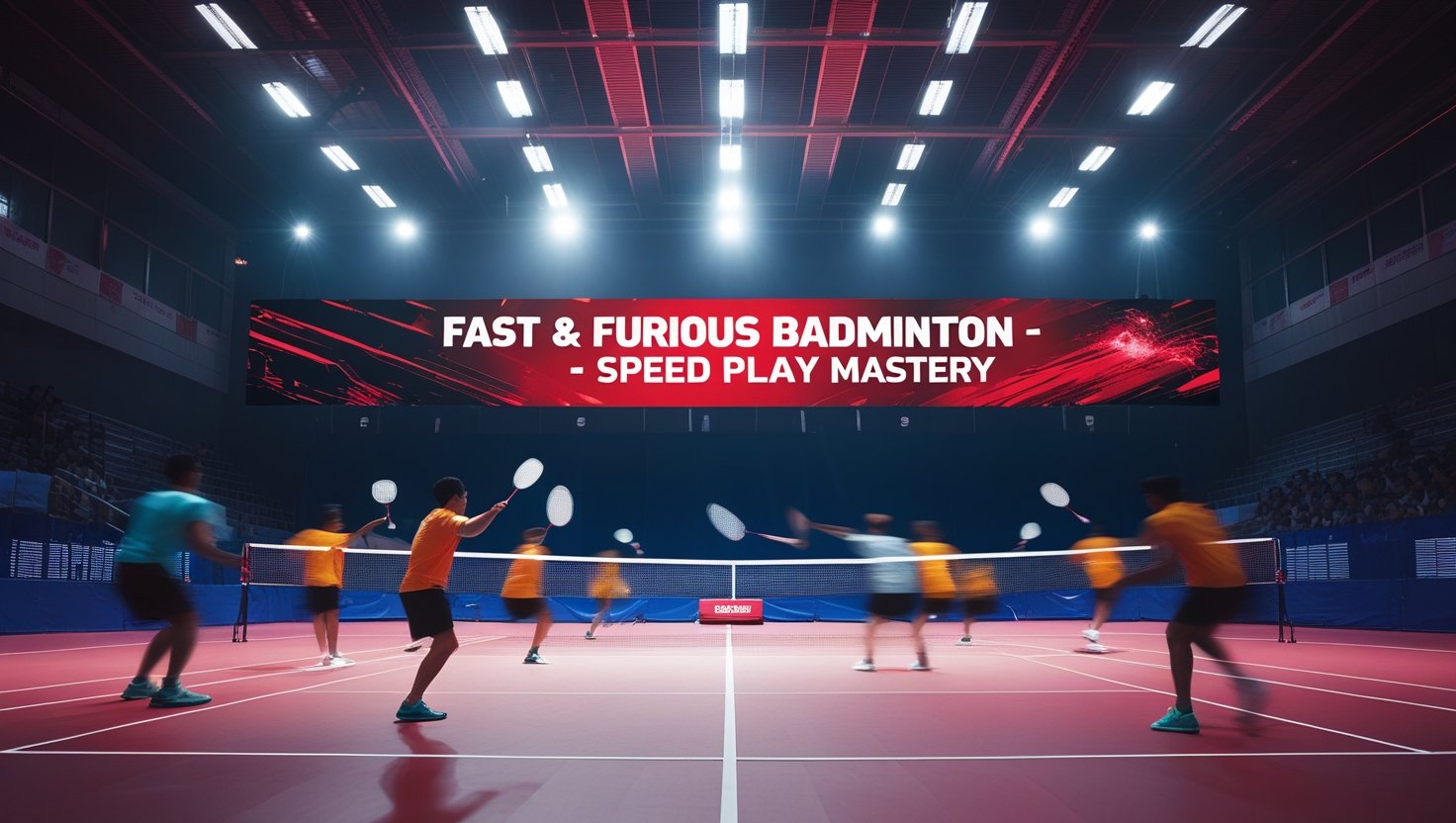
Badminton is a game where players must be flexible and athletic, but one thing that stands out is the speed that matters in the crucial moments of the badminton match. Feel your heart pounding as the shuttlecock rockets past, this is Fast & Furious Badminton in its purest form.” If you’ve ever watched elite players glide across the court and return impossibly fast smashes, you know that speed play isn’t just an edge, it’s a game-changer. In this article, you’ll discover how to supercharge your footwork, sharpen your reaction time, and build explosive power so every rally feels like a lightning duel. Ready to leave opponents in the dust? Strap in for a high-octane journey into true speed play mastery.
Why Speed Play Dominates Badminton:
In modern badminton, raw power and precision matter less than the split-second bursts of movement that win points. Fast badminton isn’t only about chasing shuttles, it’s about dictating rally pace. When you control the tempo, opponents scramble, make errors, and open the door for winning winners. Whether you’re playing singles or doubles, mastering speed play elevates your game from reactive to proactive, turning every smash into a threat and every net shot into an opportunity.
Footwork Foundations:
Your feet are the engine of your speed. Without efficient footwork, you’ll always arrive late to the shot. Begin with the four-corner split step, landing on the balls of your feet to spring in any direction. Drill cross-step lunges to strengthen lateral push-offs, and practice shadow badminton, mapping out hypothetical rallies to engrain muscle memory. Consistency is key: schedule short, intense footwork sessions three times a week to build the reflexive patterns that make you look effortlessly swift.
Training Your Mind for Instant Response:
Speed play mastery hinges on mental agility as much as physical quickness. Your reaction time determines whether you block a smash or watch it land at your feet. Improve it through random-light drills: have a partner flash colored LEDs, each color signaling a different court quadrant to defend. Another drill uses a multi-shuttle feed, your partner tosses shuttles unpredictably, forcing you to anticipate and adjust. Over time, your brain rewires to process shuttle trajectories faster, cutting your reaction latency by crucial milliseconds.
Explosive Power Secrets:
Explosiveness in badminton isn’t reserved for gymnasts, it’s the heart of every thunderous smash. Develop it through plyometric exercises: box jumps, depth jumps, and squat jumps boost fast-twitch muscle fibers, translating to more velocity in your lunge recoveries and jump smashes. Pair these with medicine-ball throws, twisting from the torso to slam the ball sideways, which simulates rotational power used in clears and smashes. Aim for two high-intensity power sessions per week, ensuring ample rest to avoid injury.
Side Shuffles, Lunges, and Quick Turns:
Agility combines speed with directional control, essential for cutting off cross-court drop shots or reverse clears. Integrate ladder drills to refine foot placement and coordination; alternate 1–2–1 shuffles through the rungs, then move to lateral Ickey shuffles for side-to-side explosiveness. Incorporate tennis-ball drills: have a partner bounce a tennis ball at varying heights while you shuffle and catch it with your racquet hand, training your body to change direction mid-move. These drills accelerate your lateral bursts and pivot fluidity.
Precision Under Pressure:
Lightning-fast footwork means little without precision finishing. To marry speed with accuracy, practice the “fast-feed target drill.” Set up cones or towels in each corner; a feeder sends shuttles rapidly to alternating spots, and you must deliver either a smash, clear, or drop shot within a two-second arrival window. This cultivates muscle memory for accurate stroke execution under speed play stress. Gradually reduce target sizes or increase feed pace to keep challenging your precision.
Sustaining High-Speed Rallies:
Speed bursts win points, but endurance wins matches. High-intensity interval training (HIIT) replicates badminton’s rally-rest cycles. For instance, sprint shuttle runs for 20 seconds, rest 10 seconds, repeated eight times, mimics a marathon of fast exchanges. Add court-specific intervals: play three-minute fast rallies followed by one-minute active rest (light jogging), repeating six to eight times. These conditions allow your cardiovascular system to recover quickly between sprints, ensuring your speed stays intact even in the final set.
Wearables and Analytics in Speed Mastery:
In the age of smart sports, data-driven insights accelerate speed play improvement. Wearable devices track metrics like step speed, jump height, and time-on-court distribution. Pair this with video analysis: record practice sessions and use motion-tracking software to spot foot-dragging or slow reaction patterns. Apps like Coach’s Eye allow frame-by-frame breakdowns of your lunge angle or split-step timing. Armed with precise feedback, you can fine-tune micro-adjustments that shave precious tenths of a second off your court movement.
Winning the Speed Mind Game:
A fast & furious style demands mental resilience. When fatigue sets in, hesitation creeps into your footwork and shot choices. Combat this by visualizing adrenaline-fueled rallies before matches, imagining your body moving with cat-like reflexes, anticipating opponent shots, and rehearsing explosive recoveries. Incorporate mindfulness breathing during changeovers to lower heart rate and sharpen focus. By training your mind to stay calm under blistering pace, you sustain peak performance when the game reaches its most frantic moments.
Conclusion:
Mastering speed play in badminton transforms you from a reactive defender into a relentless attacker. By building solid footwork foundations, enhancing reaction time, developing explosive power, and sustaining endurance, you’ll dominate rallies with blistering pace and surgical precision. Leveraging technology and cultivating a resilient mindset rounds out your speed play mastery, ensuring every match feels as electrifying as a pro showdown. Lace up your shoes, grab your racquet, and unleash your fastest, fiercest game yet.
FAQs:
1. How quickly can I improve my footwork?
With focused drills—like split steps and ladder exercises—noticeable gains appear in 4–6 weeks of consistent practice.
2. What’s the best drill for reaction time?
Random-light drills, where colored signals dictate movement direction, sharpen your split-second decision-making.
3. How often should I do plyometrics?
Aim for two high-intensity sessions per week, separated by at least 48 hours of rest to prevent strain.
4. Can HIIT replace on-court endurance training?
No—combine HIIT with actual rally simulations to mirror badminton’s unique stop-start demands.
5. Are wearable analytics worth the investment?
Yes—tools that track speed, jump height, and split-step timing reveal nuanced insights to accelerate improvement.
6. How do I maintain speed under match pressure?
Practice mindfulness breathing during breaks and mentally rehearse fast-paced rallies to build calm, confident aggression.