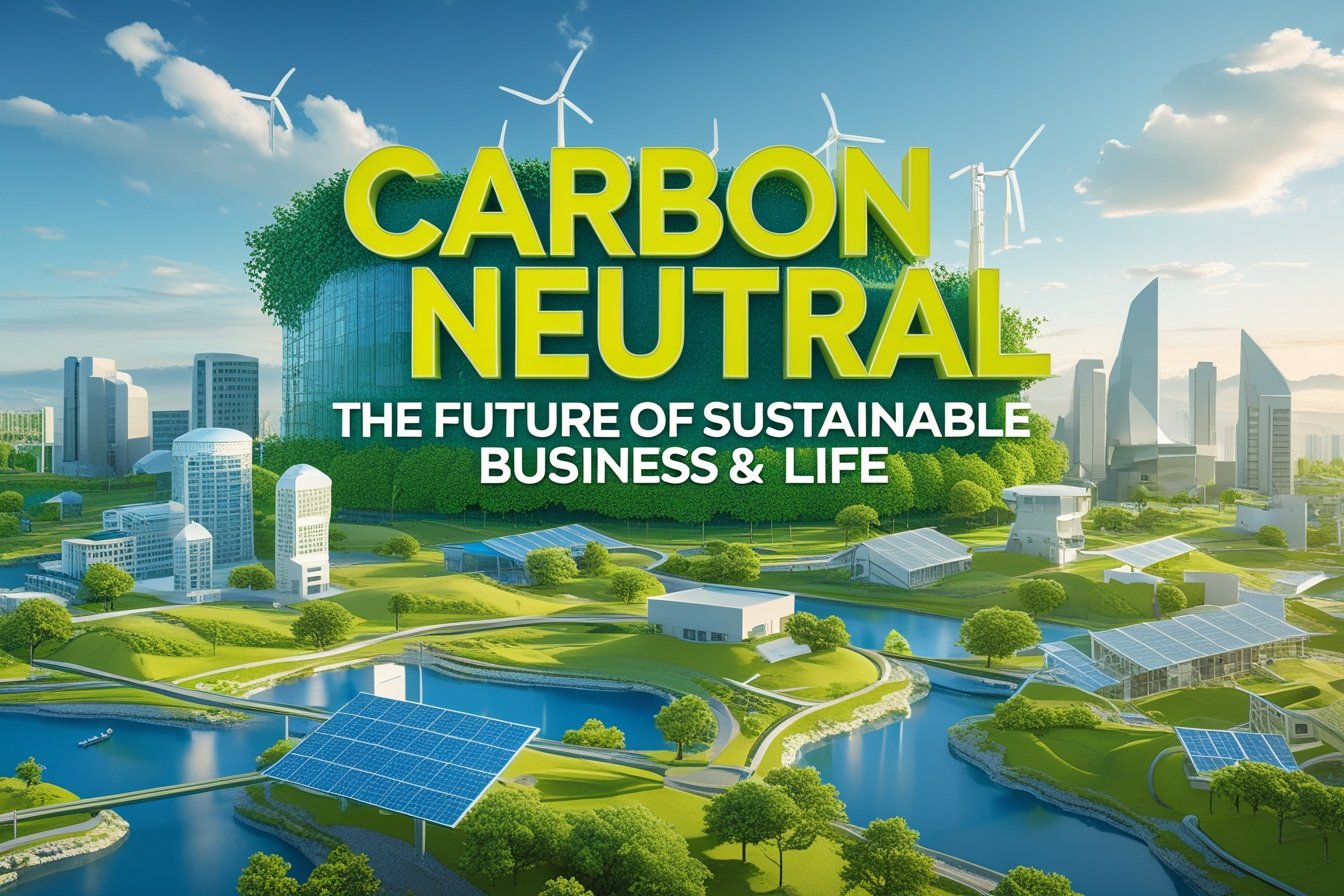
We release a lot of carbon dioxide (CO2) into the air, and that much carbon dioxide needs to be absorbed in return as well. This is why we grow trees and use clean energy; that is the meaning of being carbon neutral, so that our environment is kept safe. Nowadays, in the world, it is predicted that about 37 billion tons of CO2 are released into the air, and it is one of the main reasons behind climate change. If we don’t take action now, it will have drastic effects on our temperature, and extreme weather will increase even more. Now, both businessmen and common people are trying together to change the way of life and work, so that the future is eco-friendly and the planet remains safe.
Demystifying Carbon Neutrality:
Carbon neutrality means that whatever carbon dioxide (CO2) you release into the air, you get the same amount back absorbed in some way, like planting trees or using clean energy. But some people get confused between carbon neutral, net zero, and carbon negative. The meaning of carbon neutral is to maintain the balance, so that whatever CO2 is released, the same amount is offset as well.
Net Zero means that you totally stop releasing CO2 and adopt clean energy. And being carbon negative means you remove more CO2 from the air than you put into it, making the environment better.
Now let’s talk about carbon offsetting. This is a way where you compensate for your CO2 emissions in some other way, such as tree plantation or supporting green energy projects. There are some benefits of this balance that are easily created. But not every offset project is real or effective. Often, it is just an eyewash, and people think that the problem is solved by just offsetting, while in reality, it is also very important to reduce CO2 emissions.
Example: Take the example of Patagonia. This company uses recycled material, reduces CO2 in production, and also offsets its approach is practical and honest. On the other hand, Microsoft has said that it will become net zero by 2030, that is, it will not only stop emitting its CO2, but will also remove the CO2 that it has emitted earlier. The goal of both is a sustainable future, but the method is slightly different.
The Green Revolution in Business:
Nowadays, there is a trend of the Green Revolution going on in businesses, where companies have now started to take care of the environment. Investors are investing their money in companies that follow the rules of ESG. That is, something that is environmentally friendly, good for people, and runs well. When a company becomes carbon neutral, people trust it more, which increases brand loyalty, and in the long run, profits also increase.
New ideas and Green Technology are part of this change as well, like hydrogen-powered trucks or AI systems, which are saving the energy of factories. The best example is IKEA, which is investing its money in renewable energy for its stores, and in Milan, it has created a vertical forest design, where trees have been planted on buildings to reduce pollution and increase oxygen.
Everyday Life, Elevated by Sustainability:
People nowadays are going towards conscious living instead of buying things, meaning they carefully use those things and services, which are carbon-neutral. Like taking public transport, using eco-friendly apps, or choosing green electricity. Low-Carbon diets are also getting popular, in which people eat less meat and prefer locally grown food. Among them, the trend of sustainable fashion is growing as well, where people wear recycled or sustainable clothing instead of fast fashion.
People’s online behavior also results in emissions, things like streaming, unnecessary emails, and cloud storage also use energy, which increases the digital carbon footprint. A good example is Ecosia, which is a search engine that uses a tree for every search, it is carbon-negative and is becoming an eco-friendly alternative to platforms like Google.
Policy, Power & Planet: The Global Push:
Governments and organizations all over the world are working together to fight climate change. The aim of international policies such as the Paris Agreement, the EU Green Deal, and COP conferences is that every country should reduce its carbon emissions and build a sustainable future. But this challenge is a bit tough for developing countries, because their development is also important, so sharing the emissions responsibility equally is a difficult issue.
That is why the role of public-private partnerships is now important, where governments and companies start green projects together. Pakistan’s Ten Billion Tree Tsunami Project is the best example of it. The goal of this project is to plant trees across the country so that CO2 is absorbed from the air and the environment becomes better. This has become a strong national model of carbon sequestration.
Challenges Ahead: Can Carbon Neutrality Deliver?
Greenwashing and Public Mistrust:
As environmental awareness grows, so does the temptation to make sustainability claims that lack substance. Many companies use vague or misleading language to appear eco-friendly, a practice known as greenwashing. This not only erodes consumer trust but also undermines genuine carbon reduction efforts.
Offsets Without Real Change:
Carbon offsetting is often seen as a convenient loophole, planting trees to compensate for emissions without reducing actual output. While helpful when credible, offsets can distract from the harder, more impactful work of direct emissions cuts.
Inconsistent Regulations and Standards:
The absence of unified global standards for carbon neutrality leads to confusion and exploitation. What counts as “neutral” in one region may fall short elsewhere, resulting in a fragmented system with variable credibility.
Technical and Economic Barriers:
Achieving net-zero in hard-to-abate industries, like aviation, cement, and shipping, remains technically difficult and financially daunting. Investments in R&D and infrastructural overhaul are still lacking on a large scale.
Behavioral and Systemic Resistance:
Transitioning to low-carbon lifestyles and economies challenges deep-rooted habits, industries, and power structures. Without systemic changes, such as rethinking growth, incentivizing circular economies, and promoting degrowth, the carbon-neutral movement risks stalling.
Your Role in a Carbon Neutral Future:
Calculate and Act:
Start by understanding your carbon footprint. Tools like the WWF’s footprint calculator can help you identify which activities, travel, diet, and energy use the most emissions.
Choose Green Alternatives:
Choose renewable energy providers, electric transport, and energy-efficient appliances. Even switching to banks or insurers with sustainable investment portfolios can make a difference.
Practice Conscious Consumption:
Buy less, buy better. Supporting local, durable, and low-impact products helps minimize your individual footprint while signaling demand for sustainable practices.
Offset Wisely:
If offsetting emissions, make sure to choose projects verified by rigorous standards like Gold Standard, Verra, or Cool Effect. Transparency, permanence, and additionality are key indicators of effectiveness.
Advocate and Educate:
Change is amplified through influence. Share what you learn, support sustainability campaigns, and push for stronger policies at the local and national level.
Support Businesses Doing It Right:
Reward companies actively reducing emissions and practicing full-scope sustainability. Certifications and ESG reports offer insight into who’s walking the talk.
Conclusion:
Carbon neutrality is more than a buzzword, it’s a bridge between today’s emissions-heavy world and a livable, sustainable future. But it must go beyond slogans and surface-level solutions. It demands transparency, innovation, collaboration, and a willingness to redefine progress itself. Whether you’re a business leader, a policymaker, or just someone trying to reduce your impact, your role is vital. The carbon-neutral future isn’t some distant destination, it’s a choice we make, and remake, every day.
FAQs:
Q1: What’s the difference between carbon neutral and net zero?
Carbon-neutral offsets emissions; net zero involves reducing them to near-zero before offsetting.
Q2: Is carbon offsetting truly effective?
Yes, when used transparently and alongside real emission reductions, not as a substitute.
Q3: Can individuals become carbon neutral?
Absolutely—through mindful consumption, clean energy, and verified offsets.
Q4: Is carbon neutrality just a trend?
No, it’s becoming a global standard across industries and policy frameworks.
Q5: How do I verify a company’s carbon-neutral claim?
Look for third-party certifications like Carbon Trust or Gold Standard.
Q6: Are digital activities part of my carbon footprint?
Yes—even streaming, cloud storage, and emails consume energy and emit CO₂.