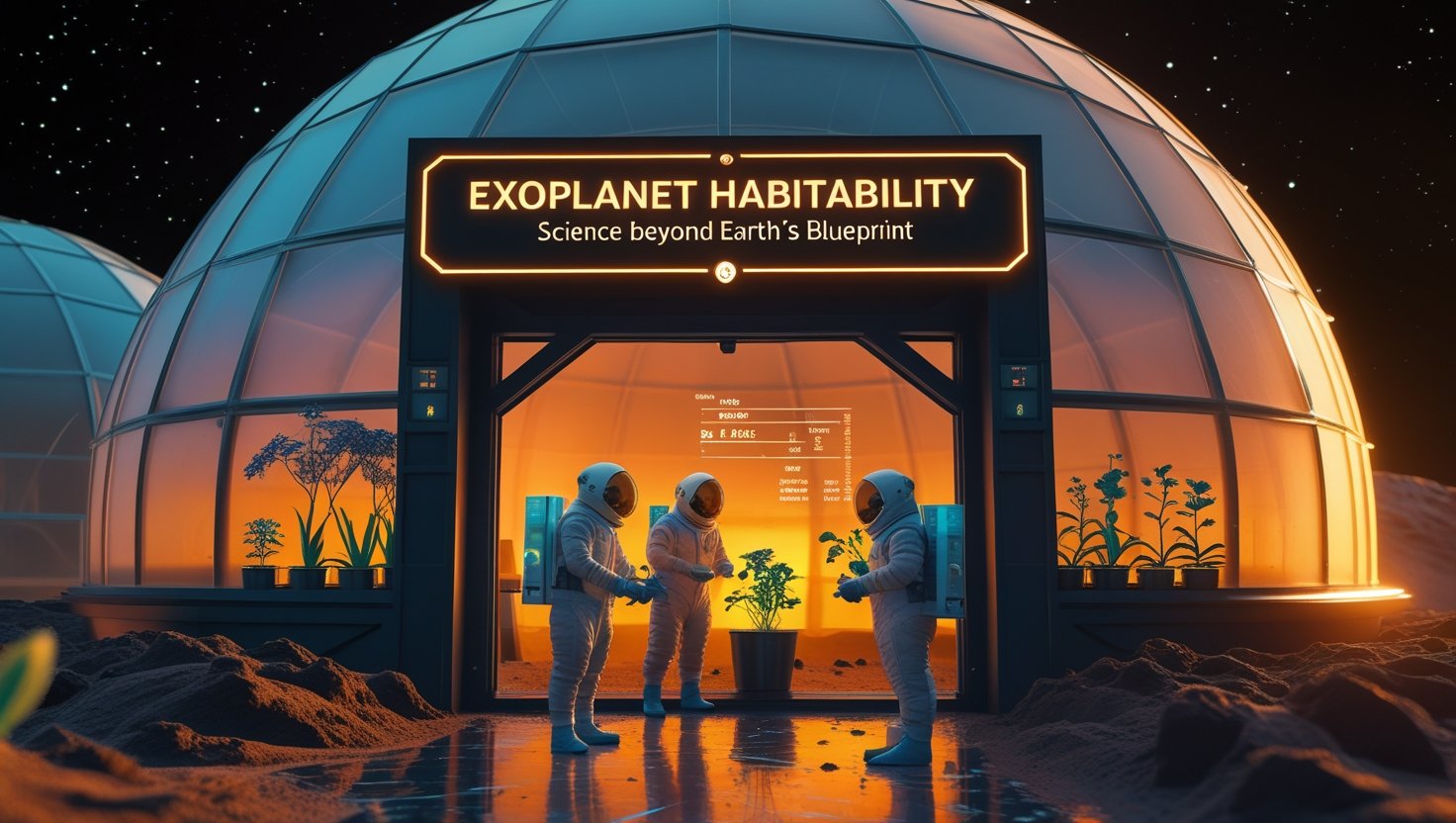
Space is vast, and we all know that there are more than a thousand planets out there, and alone in our galaxy as well. There are many solar systems in our Milky Way galaxy. Imagine a reality where life blossoms on planets that defy all our Earth-centric expectations, a universe where exoplanet habitability is redefined by forces and phenomena scarcely imaginable. In the vast cosmic theater, scientific exploration has begun to shatter the mold of what we thought was possible, venturing far beyond Earth’s blueprint. This article delves into the innovative science and emerging theories that are rewriting the rules of habitability, investigating new criteria for life, and inspiring humanity to envision worlds that are as diverse as they are promising.
Rethinking Habitability in a New Era:
For centuries, our understanding of habitability has been rooted in the comforts of terrestrial life. Yet, recent discoveries are challenging this age-old notion. Planetary scientists now argue that the conditions for life might be as varied as the universe itself. Rather than being confined to a narrow set of parameters, exoplanet habitability embraces a spectrum of possibilities.
Traditional markers, such as the presence of liquid water and a temperate climate, remain critical, but they are no longer the sole factors. Contemporary research suggests that geological activity, magnetic fields, and atmospheric composition could open up alternative paths to sustaining life. Imagine a world with liquid hydrocarbons instead of water or one that harnesses internal heat to generate energy far from its sun. With new instruments and space missions like Kepler, TESS, and the James Webb Space Telescope, we’re beginning to glimpse these diverse worlds. This evolving perspective is a celebration of nature’s ingenuity, inspiring scientists to pursue the mystery of life from every conceivable angle and redefine what it means to be habitable in the cosmos.
Mapping the Habitable Zone:
Central to the discussion of exoplanet habitability is the concept of the habitable zone, often affectionately called the “Goldilocks zone.” This is the region around a star where conditions are just right for liquid water to exist, a key ingredient for life as we know it. However, this classical definition is transforming as researchers uncover exceptions that challenge these boundaries.
New data indicate that even planets on the fringes of their star’s warmth may harbor environments conducive to life. Thick atmospheres rich in greenhouse gases can trap heat on seemingly cold worlds, or tidal forces from a neighboring planet might generate sufficient internal friction to produce heat. These insights urge us to reconsider the conventional map of habitability. By fusing traditional models with advanced simulations of atmospheric dynamics and stellar behavior, scientists are bridging the gap between theory and observation. The result is a nuanced picture of potential life-friendly environments that promises to expand the list of candidate worlds well beyond our initial projections, all while embracing a more flexible definition of exoplanet habitability.
Crafting Worlds with Breathable Skies:
A planet’s atmosphere plays a pivotal role in determining its suitability for life. Beyond merely offering protection from cosmic radiation and regulating temperature, the atmospheric composition can serve as a beacon of biological activity. Today’s research in science beyond Earth’s blueprint is studying exotic atmospheres that differ vastly from our familiar mix of nitrogen and oxygen.
Modern spectroscopic techniques allow us to dissect the light passing through an exoplanet’s atmosphere and identify key molecules such as water vapor, methane, and even oxygen. These spectral fingerprints—known as biosignatures—could provide tantalizing evidence of life or, at the very least, hint at environments where life might thrive. Beyond biosignatures, atmospheric dynamics themselves are a field of study; circulation patterns, cloud formations, and chemical processes reveal how a planet’s climate operates. Understanding these processes is essential for predicting long-term habitability. From planets orbiting red dwarfs with mysterious haze layers to super-Earths with dense, crushing atmospheres, each world presents an atmospheric puzzle that challenges our earthly preconceptions and enriches our understanding of how life might adapt to radically different realms.
Unveiling the Hidden Engines of Life:
While the surface and atmosphere of a planet capture our imaginations, its inner workings are just as crucial in determining its potential for habitability. Recent studies suggest that the geological and thermal histories of exoplanets may be just as important as their position in the habitable zone.
On Earth, plate tectonics plays an integral role in recycling carbon, regulating climate, and fostering the chemical conditions necessary for life. Similarly, the internal dynamics of exoplanets, such as mantle convection, volcanic outgassing, and magnetic field generation, could create environments where life not only exists but also evolves. A robust magnetic field, for instance, shields a planet from harmful stellar winds and cosmic rays, preserving the integrity of the atmosphere over billions of years.
Meanwhile, ongoing geological activity might ensure the presence of essential nutrients and energy sources for primitive life forms. By integrating models of planetary interiors with surface observations, modern astrophysics is piecing together a more holistic picture of habitability, one that spans from the planet’s core to its distant exosphere. This fusion of interior and atmospheric science offers fresh insights into how diverse planetary systems can nurture, and perhaps even create, life under conditions that stray far from Earth’s blueprint.
Biosignatures and Beyond:
At the heart of the quest for extraterrestrial life is the search for biosignatures, those distinctive chemical or physical clues that hint at biological processes. In recent years, astronomers have shifted from merely cataloging exoplanets to actively characterizing them, looking for signs that life might be stirring on distant worlds.
Biosignatures come in many forms: from the co-presence of gases like oxygen and methane in proportions that defy simple chemical explanations to unusual patterns in a planet’s reflectance spectrum that suggest the presence of vegetation or microbial life. Detecting these signals is a monumental challenge, requiring not only the most advanced telescopes but also sophisticated models that help distinguish between biological and non-biological processes. The science behind biosignature detection is ever-evolving; factors like planetary rotation, seasonal cycles, and even cloud cover can all influence the signals we receive.
What’s clear is that a multi-disciplinary approach, blending astrobiology, atmospheric science, and planetary geology, is essential to identify the true markers of life. Each new discovery, be it a hint of water vapor on a super-Earth or unexpected chemical disequilibria in an exoplanet’s atmosphere, brings us one step closer to answering humanity’s most profound question: Are we alone?
Merging Innovation with Cosmic Exploration:
The future of exoplanet habitability research is bursting with promise as cutting-edge technology and bold theories converge. Next-generation space telescopes and ground-based observatories are poised to expand our understanding of distant worlds by capturing unprecedented details of their atmospheres, surfaces, and even interiors. Equipped with ultra-sensitive detectors and high-resolution spectrographs, these instruments promise to reveal the hidden intricacies of planets that once lay beyond our reach.
Simultaneously, breakthroughs in simulation technology and AI-driven data analysis are transforming how researchers interpret the cosmic signals. Machine learning models now sift through vast datasets to pinpoint promising candidates for habitability, while advanced computer simulations recreate every nuance of planetary climates and geologies. This intersection of innovation and exploratory zeal is rewriting the rulebook on exoplanet habitability.
As theories evolve and instruments sharpen, scientists are increasingly confident that the next great discovery in the search for life will not only challenge our preconceived notions but also inspire us to think beyond conventional boundaries. The promise of finding habitable worlds, and perhaps life itself, is no longer confined to the realm of science fiction; it is an imminent reality fueled by relentless research and technological progress.
Conclusion:
The exploration of exoplanet habitability takes us far beyond Earth’s blueprint, challenging our understanding of life’s possibilities. From rethinking the habitable zone and delving into the secrets of atmospheric alchemy to unveiling planetary interiors and searching for biosignatures, science has opened new frontiers that promise to reshape our view of the cosmos.
FAQs:
1. What is exoplanet habitability?
It refers to the conditions that make an exoplanet suitable for life, including factors like temperature, water presence, and a stable atmosphere.
2. How does the habitable zone influence a planet’s potential for life?
The habitable zone, or “Goldilocks zone,” is where conditions are just right for liquid water to exist on the planet’s surface.
3. What role do atmospheres play in determining habitability?
A planet’s atmosphere regulates temperature, provides protection from radiation, and can show chemical signatures that hint at biological activity.
4. Why are planetary interiors important for habitability?
Internal dynamics such as geothermal activity and magnetic field generation help sustain surface conditions conducive to life.
5. What are biosignatures, and why are they significant?
Biosignatures are chemical or physical signs, like unusual gas mixtures, that suggest the presence of life, helping astronomers identify promising exoplanets.
6. How will future technology advance exoplanet habitability research?
Next-generation telescopes, AI analysis, and advanced simulations will improve our ability to detect and study distant, potentially habitable worlds.